Tameer e Karachi – Building with Quality, Trust, and Expert Craftsmanship
Tameer e Karachi – Building with Quality, Trust, and Expert Craftsmanship
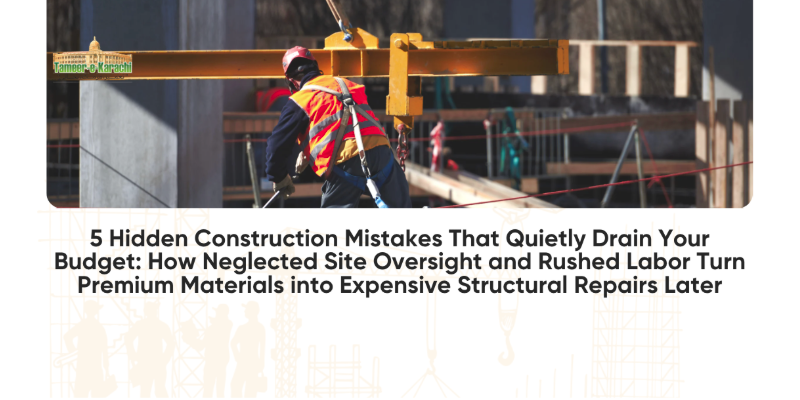
Building a home in Karachi or Karachi? Avoid hidden construction mistakes that increase repair costs. Learn tips on planning, materials, and contractors.
Construction mistakes are expensive because they do not always show up on day one. A project may look fine at handover, but weak planning, poor materials, bad supervision, and rushed execution often create bigger problems later. For property owners in Karachi and across Pakistan, the smartest way to protect a building is to avoid the mistakes that quietly increase repair costs, delay work, and reduce long-term value.
This guide explains the most common construction mistakes property owners make, why they happen, and how to avoid them. It is written for people searching for practical advice on construction mistakes, home construction in Pakistan, property owner tips, construction project planning, and building quality control.
A construction project is not only about finishing the work. It is about making sure the structure, materials, and execution can hold up over time. When a mistake is made early, the cost is often hidden at first. Later, that same mistake can turn into cracks, leakage, uneven surfaces, structural weakness, or repeated maintenance issues.
Many property owners search for terms like construction cost increase, how to avoid construction mistakes, house construction tips, and building repair problems because they want to understand why projects become more expensive than expected. The answer is usually the same: bad decisions made early usually cost more later.
One of the biggest construction mistakes is starting work before the project is properly planned. Many owners want to begin quickly, but without a clear plan, the project becomes disorganized. This leads to budget overruns, delays, material waste, and repeated changes during execution.
Proper planning should include the scope of work, estimated cost, timeline, material selection, design clarity, and team responsibilities. If these things are unclear, the project can move in the wrong direction from the beginning. Search terms like construction planning Pakistan, how to plan a house construction project, and building project checklist are popular because people know planning is where cost control starts.
When planning is weak, owners often make decisions in a rush. That creates corrections, rework, and unnecessary spending. A wall may need to be moved, a room layout may not work, or electrical and plumbing points may need to be changed later. Every change after work starts costs more than deciding correctly in advance.
Another costly mistake is hiring the wrong construction team. Many property owners choose a contractor only because the quote is low. On the surface, this feels like saving money. In reality, low-cost decisions often lead to poor workmanship, delays, weak material use, and more repair costs later.
People often search for how to choose a contractor, best construction company in Karachi, contractor selection tips, and how to find a reliable builder because they know the team matters as much as the design. A good contractor is not just someone who can begin the work. A good contractor can manage the job properly until completion.
An inexperienced or unreliable contractor may ignore quality, cut corners, or fail to supervise properly. That can result in uneven finishing, leaks, cracks, delays, and disputes. Owners may then need to spend more money fixing what should have been done correctly the first time.
Material quality is one of the most important parts of construction, yet many owners try to reduce cost by choosing cheaper options. This may lower the initial budget, but it usually increases long-term repair expenses. Poor-quality cement, steel, paint, plumbing, tiles, waterproofing products, and fixtures often fail much sooner than expected.
Searches like best building materials, cheap vs quality construction materials, house material quality, and construction material guide are common because people want to understand what is worth paying for. The truth is simple: not every place in a project can be cost-cut. Some materials directly affect strength, durability, and maintenance.
Low-quality materials wear out faster. That leads to frequent repairs, water seepage, surface damage, and reduced building life. What looked like a saving at first becomes a repeated expense later.
A construction site needs supervision. Without it, even good plans can fail. Many property owners assume the contractor or labor team will manage everything properly, but on-site supervision is what ensures quality, accuracy, and discipline.
Search terms like construction supervision, site supervision tips, quality control in construction, and building inspection checklist are important because supervision protects the project from hidden mistakes. It is not enough to say work is being done. The work must be checked while it is being done.
When no one checks the work properly, mistakes remain inside the structure. These may not be visible immediately, but they can later cause cracks, uneven finishing, leaks, or electrical and plumbing issues. Fixing hidden problems after completion is always more expensive.
Many property owners ignore small issues because they seem harmless at first. A tiny crack, a minor leak, a loose tile, or a patch of dampness may not look serious. But in construction, small problems often grow into expensive ones if they are ignored.
This is one of the most searched problems because people look for small cracks in walls, water leakage repair, damp walls, and building maintenance tips when they start noticing early warning signs. The earlier a problem is identified, the easier and cheaper it usually is to fix.
A small leak can damage paint, plaster, ceilings, and structure over time. A small crack can widen. A loose tile can point to a deeper issue. Waiting gives the problem time to spread and increases the final repair bill.
Property owners often search for signs before calling a professional. If your building shows any of these issues, it may need attention:
These signs do not always mean major structural damage, but they do mean something needs to be checked. Building problems rarely fix themselves. They usually become more costly when ignored.
The best way to save money in construction is not by choosing the cheapest option. It is by making the right decisions early. Good planning, the right contractor, quality materials, proper supervision, and timely maintenance all reduce long-term cost.
Property owners searching for construction tips for homeowners, how to reduce construction costs, home building mistakes, and property maintenance advice usually want one thing: fewer surprises. That is exactly what disciplined construction gives them.
The most common construction mistakes are poor planning, hiring the wrong contractor, using low-quality materials, ignoring supervision, and delaying repairs.
They create rework, repairs, delays, material waste, and hidden damage that becomes more expensive over time.
They should check the project scope, budget, timeline, contractor experience, material quality, and supervision process.
Not always, but if “cheap” means weak materials or poor workmanship, it usually becomes more expensive later.
Supervision makes sure the work follows the plan, uses the right materials, and avoids mistakes that are hard to fix later.
Cracks, leakage, dampness, uneven surfaces, sticking doors, and peeling paint are common early warning signs.

At Tameer e Karachi, we’re dedicated to quality, trust, and timely project delivery. From construction to renovation, our goal is to build lasting value for our clients and our city.

© Copyright 2025 Tameer e Karachi. All Right Reserved.
 Call Now Button